
MENSTRAVAGANZA #MHDay

WASH United, the international social impact organization that “combines the power of sports superstars, interactive games and positive communication to excite people about sanitation and practicing good hygiene” just wrapped up its 28-day campaign dedicated to shedding more light on menstruation and Menstrual Hygiene Mangement (MHM):
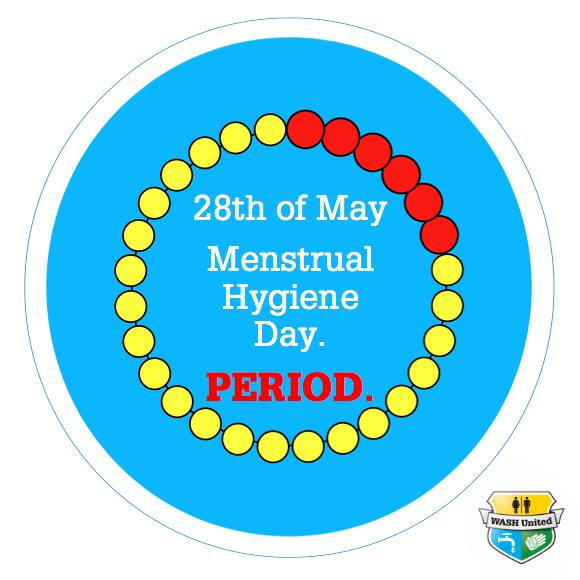
Menstravaganza

May #MENSTRAVAGANZA Day 28: BIG NEWS! Today wraps up our 28-day campaign dedicated to shedding more light on menstruation & MHM. THANKS FOR ALL YOUR SUPPORT! WASH United, together with amazing global partners, announces that it will make May 28th a globally-recognised Menstrual Hygiene Day. Will you join us in supporting #MHDay?

(src: WASH United FB page)

Yes, of course! MHM is such an important and often still neglected hygiene issue that we urgently need to keep the conversations going – beyond this 28-day campaign. Online and offline.

Please also be reminded that the Sustainable Sanitation Alliance (SuSanA) dedicated a category on its forum to this matter where professional conversations on everything around MHM are already taking place. A few scientists and activists exchanging ideas online certainly won’t be enough, which is why this idea of celebrating May 28th as an international Menstravangaza Day is a smart move.

What I really like about WASH United (the link opens their very active Facebook group) and why their work matters to me: our target group (the people) usually doesn’t pay attention to scientists, but they do hear what superstars say. Remember Angelina Jolie’s preventive double mastectomy? Right. Now, if we can achieve a similar open conversation on MHM the way we are now already talking about (the lack of decent) toilets or mastectomy, then we may have achieved more than what could probably be done via the usual top-down approaches in dev aid.

Let’s put the “men” in Menstravaganza!

P.S.: Did you know there’s an online museum on Menstruation? It’s called “Museum of Menstruation & Women’s Health“. Oh, and the Menstrupedia is also very informative!
Caution: Cholera!

The following post by guest blogger Thilo Panzerbieter of the German Toilet Organization (GTO) refers to the GTO activities during WWD2013:

gto_weltwassertag13_130322_IMG_4165_jr

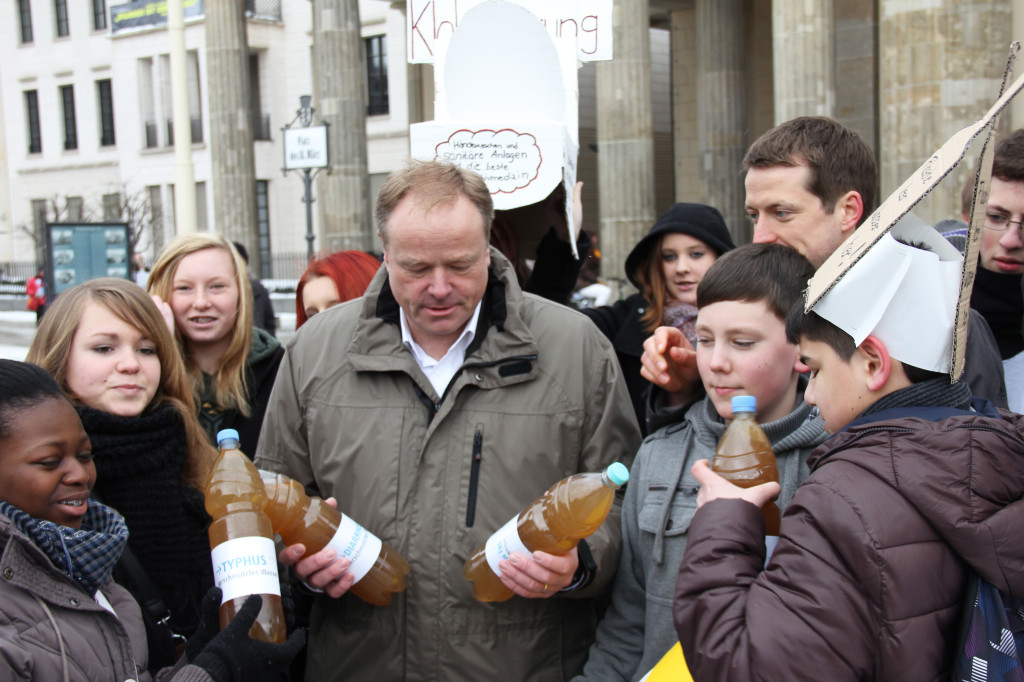
On this year’s World Water Day, 200 school pupils from five schools assembled at Berlin’s Brandenburg Gate and confronted Germany’s Federal Minister of Development, Dirk Niebel, with “dirty water”, placards and various other diplays. This provocative gesture intended to remind Niebel that 783 million people still live without access to clean water and 2.5 billion have no adequate sanitation. Continue reading “Caution: Cholera!”

WASH karma score

Just as a quick hit and food for thought: in a recent e-mail exchange with WASH colleagues regarding online participation, I came to realize that it would be great to have some sort of (transferable) WASH karma for Water, Sanitation and Hygiene (WASH) experts.

I have a friend who is an expert in the open-source server-side scripting language PHP. Being a programmer by profession, he often contributes to Stackoverflow.com – a Q&A site for IT people. Questions and answers are rated and get voted up and down. His karma or online reputation is based on the quality of his answers. There is a direct relation between his expert knowledge, his willigness to share it with others, the resulting karma / online reputation and new contracts. Because, hey, wouldn’t you want to hire experts only? Right.

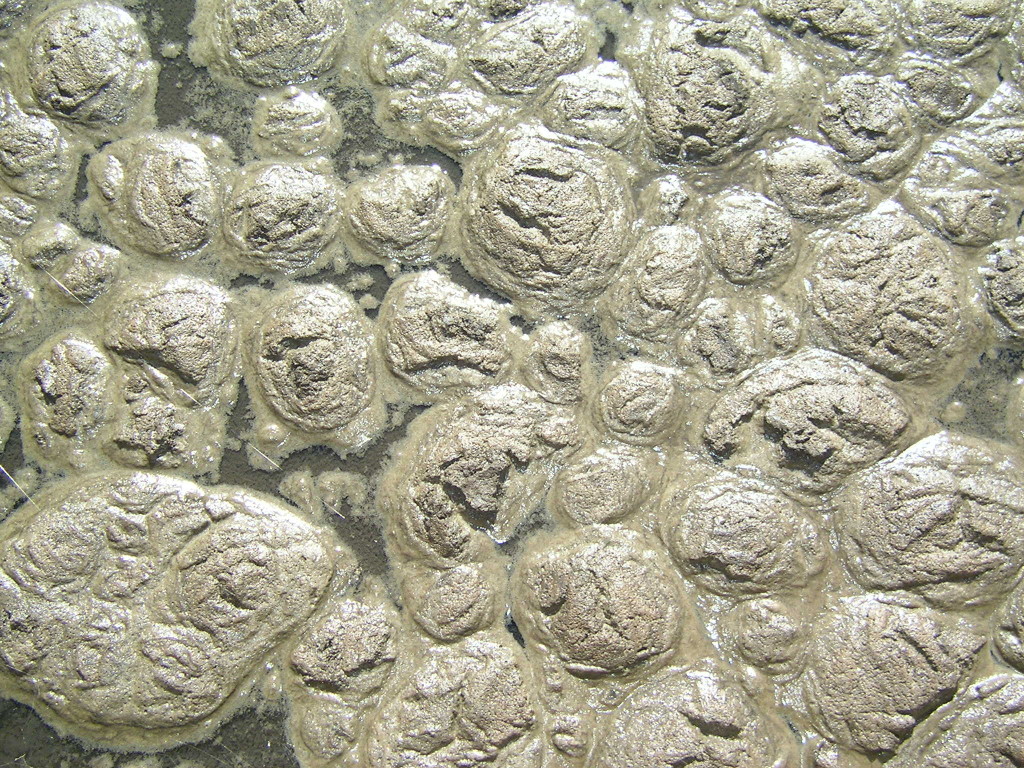
Microthrix parvicella An unrelated, but still interesting photo to attract the reader’s visual attention: Microthrix Parvicella, a family of bacteria the author of this blog encountered while working on a waste water treatment plant back in the days. Continue reading “WASH karma score”

No toilet, no wedding

Kenya-based video journalist Ruud Elmendorp recently produced this short trailer (on behalf of Waste.NL) on a young woman that refuses to marry her boyfriend – until his family builds a proper toilet:

The story is about a boy who is in love with the daughter of a school teacher. Much to the dismay of his father, she refuses because she finds their toilet unusable and refused to have to go to the bush for defecation.

The women’s group has filed a number of complaints due to poor sanitation and present this to the village chief, incidentally the uncle of the boy. He is quite amazed by this and decides to call the government sanitation adviser.

After an animated session with the villagers and the chief, many decide to go for suitable toilets. The film ends happily with the girl accepting the marriage proposal as the sanitation issues have been solved.

Ruud regularly produces interesting video material from East Africa that we have also featured on AfriGadget, btw.

Fecal Sludge Management in Africa and Asia

The following post by guest blogger Pascal Garde on behalf of Doulaye Koné of the Bill and Melinda Gates Foundation (BMGF) refers to a recently published study on Fecal Sludge Management in Africa and Asia.

Non-sewered, or “on-site sanitation” is the main technological approach used in most urban areas in Africa and Asia. Use of this technology requires regular provision of human waste collection and transportation services, which are generally unregulated and usually provided by private operators.

There are currently huge information gaps on how collection and transportation of human waste is organized. Decision makers, entrepreneurs and investors often lack important information (e.g. market size, business opportunity, profitability) to make Fecal Sludge Management (FSM) a functional component of the sanitation value chain. However, providing safe emptying, transport, and treatment of human waste is critical to ensure healthy urban environments. In order to better understand the types of FSM services offered in two different regions, the Bill & Melinda Gates Foundation funded a study , entitled “Landscape and Business Analysis for FSM Emptying and Transportation in Africa and Asia” that analyzes these business segments in 30 cities across Africa and Asia. Continue reading “Fecal Sludge Management in Africa and Asia”