Global Handwashing Day 2012

Only one third of all people wash their hands with soap after using the toilet or before
eating. The consequences are fatal. Each day, about 3,600 children under five die from diarrhea.

Diarrheal diseases in children are still the second most common cause of death. Medical studies show that regular hand washing with soap can prevent half of all diarrheal.

In Europe alone, the annually recuring influenze epidemics or severe virus epidemics could be tackled through improved hygiene. The EHEC epidemic in Germany in 2011, or the recently imported Noro virus from China which paralyzed many students in German primary schools, clearly demonstrate the need for regular handwashing with soap. It’s so easy, yet often neglected.
GTO World Hand Wash Day 2012

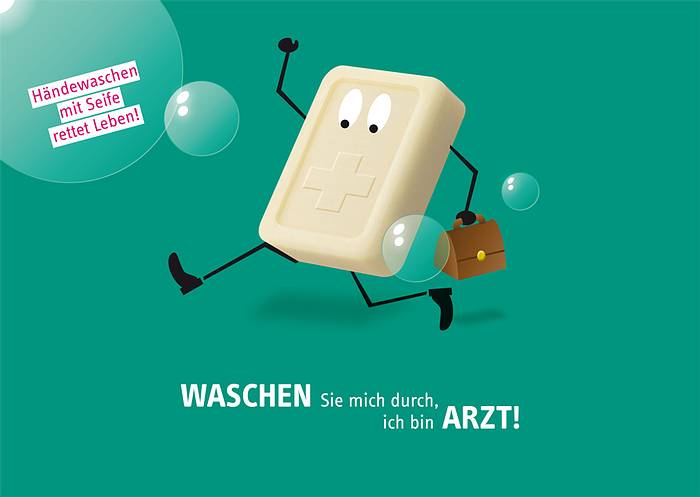
To raise awareness for the need of regular hand washing with soap, the German Toilet Organization e.V. will today celebrate Global Handwashing Day 2012 at Gendarmenmarkt in Berlin – along with students from four schools in Berlin. The art installations by the students will show the importance of hand washing with soap and also demonstrate why toilets are an integral part of healthy living.

Around the world, over 200 million people are involved in celebrations in over 100 countries. Global Handwashing is endorsed by a wide array of governments, international institutions, civil society organizations, NGOs, private companies, and individuals.

So, what is your local community doing on Global Handwashing Day 2012?

EUR 50k award up for grabs in international appropriate tech competition

With the “empowering people. Award”, the Siemens Stiftung (Siemens Foundation) would like to identify efficient technical solutions which empower people in developing and emerging countries to independently combat existential problems in basic supply.

“empowering people. Award”

The Stiftung is calling out to inventors and developers from all regions worldwide and invites them to enter simple and appropriate technical products and solutions in the categories Water & Waste Water, Energy, Waste Management & Recycling, Health, Food & Agriculture, Housing & Construction, and Information & Communication Technology. Continue reading “EUR 50k award up for grabs in international appropriate tech competition”

“Next-generation” toilets showcased at Gates Foundation

In June 2011, the Bill and Melinda Gates Foundation awarded eight universities grants of approximately $400,000 to leverage, in one year, advances in science and technology to create a waterless, hygienic toilet that is safe and affordable for people in the developing world.

Bill Gates with a researcher from California Institute of Technology at the Reinvent the Toilet Fair in Seattle on August 14, 2012. (src: http://www.gatesfoundation.org)

On August 14th and 15th 2012, the Gates Foundation hosted the Reinvent the Toilet Fair to showcase the work of these teams and awarded the first winners of the Reinvent the Toilet Challenge: Continue reading ““Next-generation” toilets showcased at Gates Foundation”

Better maintenance and monitoring needed, UN-Water GLAAS 2012 suggests

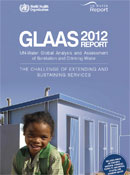
glass_report_2012 The Global Analysis and Assessment of Sanitation and Drinking-Water (GLAAS) reports on the capacity of countries to make progress towards the MDG water and sanitation target and on the effectiveness of external support agencies to facilitate this process.

The GLAAS 2012 report shows that in many countries policies and programmes underemphasize adequate financing and human resource development to sustain the existing infrastructure and to expand access to sanitation, drinkingwater and hygiene services. Financing is insufficient and the institutional capacity to absorb what is available is limited. The danger of slippage against the MDG target is real.

The GLAAS report presents data received from 74 developing countries, up from 43 in 2010; and from 24 bilateral and multilateral agencies covering 90% of global official development assistance funds. UN-Water GLAAS has been designed in response to the need to reduce the reporting burden and harmonize different reporting mechanisms of UN-family Member States. GLAAS is increasingly used as a tool for more informed decision-making and is taking up the challenge of making necessary information available.

UN-Water The Global Analysis and Assessment of Sanitation and Drinking-Water (GLAAS)

Download GLAAS 2012 Report (PDF; 9.4 MB)


How about a Cradle2Cradle certification for toilets?

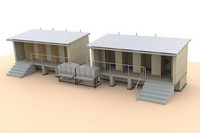
UDDTs in Ukunda, KenyaYou may or may not have heard of the Cradle to Cradle® design concept – an approach to environmental engineering where materials flows are analysed and optimized to enhance the quality of products for the user so that they are more practical for the user, healthier for everyone affected by the product, and beneficial for the economy and the environment. Continue reading “How about a Cradle2Cradle certification for toilets?”