
Public toilets are missing in most countries – even in 2009 we still lack decent, clean & affordable public toilets in most places and it’s still only a few companies that are active in this sector.
One reason for coming up with this blog certainly was the lack of such public facilities, and it is projects like the Kenyan Ikotoilet that my main interest is focussed on (~ seeing “sanitation as a business”, not only as an unpaid for, unappreciated public service). While we will blog about Ikotoilets in the coming days (will be published on AfriGadget.com first), let me introduce you to a Dutch company called Urilift that produces so-called “pop-up urinals”:
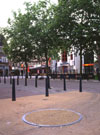
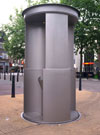 Urilift: “The Urilift is placed where it is needed: at hot spots in entertainment districts, for instance. Three people can use the urinals in the attractively styled stainless steel cylinder at the same time without seeing or being bothered by each other. The Urilift is only above ground when it is needed. For the rest of the time, it is completely hidden underground.” And there’s one interesting detail: “The Urilift is connected to the water mains but can also be supplied with a water tank, or without water. The water tank operates on an ecosystem that is filled automatically with rainwater.” Continue reading “Urilift”
 As admin and co-editor of the GTZ ecosan newsletter – a quarterly newsletter on ecological and sustainable sanitation – I am pleased to announce the publication of the latest edition no. 32 from July 2009.
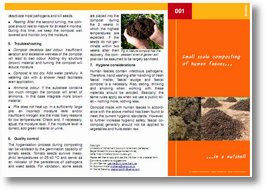 Based on the results of field research and experience gathered by implementing ecosan systems at Valley View University (VVU) in Accra, Ghana, nutshell guidelines have been developed jointly by the University of Hohenheim, Berger Biotechnik and VVU as part of the “Re-use of Ecological Sanitation Products in Tropical Agriculture (
 As admin and co-editor of the GTZ ecosan newsletter – a quarterly newsletter on ecological and sustainable sanitation – I am pleased to announce the publication of the latest edition no. 31 from April 2009.